
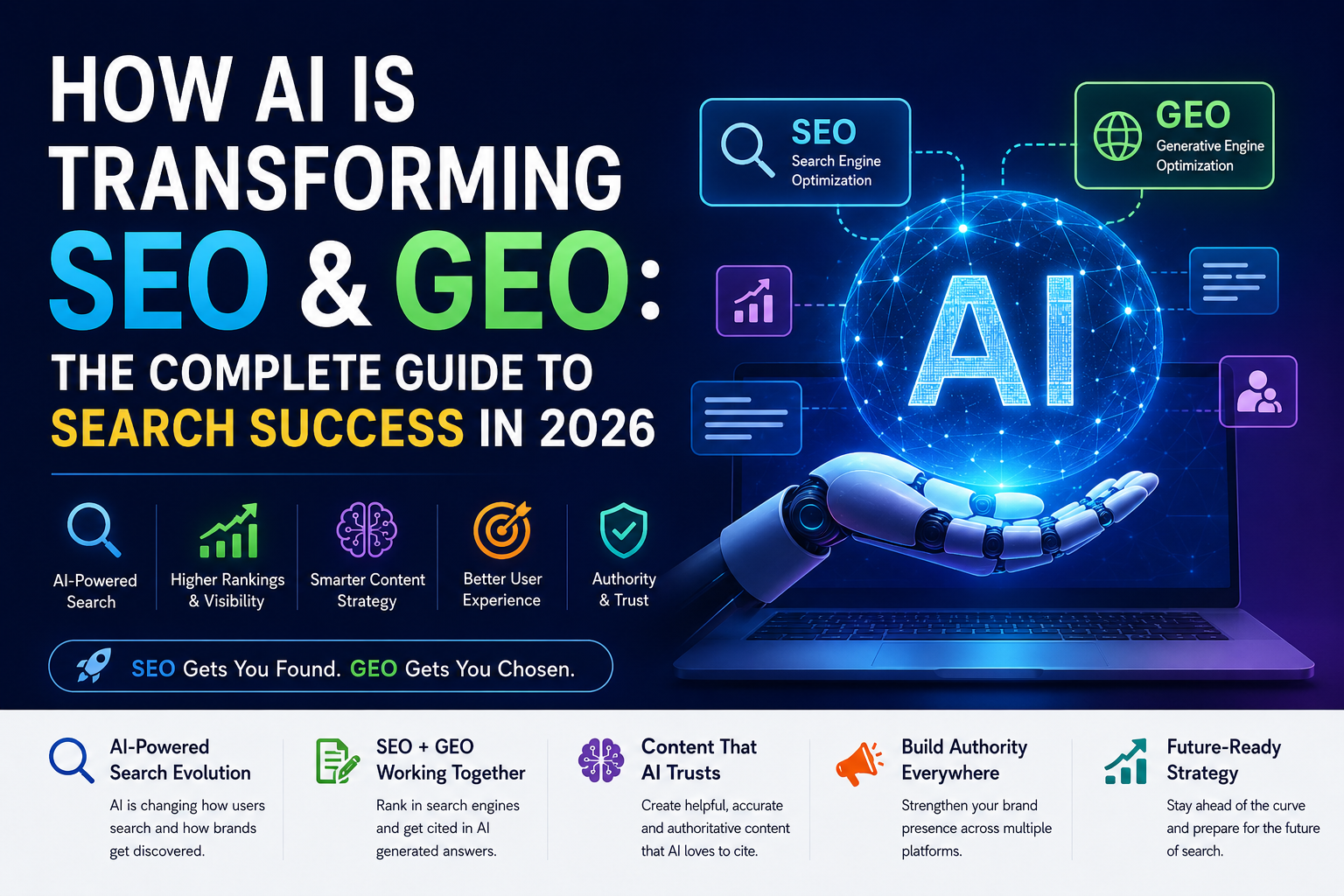
The digital landscape is undergoing a seismic shift. Traditional search engine optimization, built on keywords and backlinks, is colliding with artificial intelligence. AI search engines are no longer a distant future—they’re reshaping how businesses capture visibility today. If you’re a webmaster or SEO professional, understanding how to optimize for AI search engines isn’t optional; it’s essential for survival.
This comprehensive guide explores how SEO is transforming in 2026, the rise of AI-powered search alternatives, and the actionable strategies you need to dominate visibility across both traditional and AI-driven search platforms.
Understanding AI Search Engines and Their Impact on Traditional SEO
For decades, Google’s dominance defined search engine optimization. Today, AI search engines like Perplexity, OpenAI’s ChatGPT Search, and Claude Search are fundamentally changing how users find information. These platforms prioritize conversational understanding, contextual relevance, and direct answers over keyword matching.
The implications are profound. Traditional SEO focused on ranking for specific keywords. AI search strategy, by contrast, emphasizes topical authority, semantic depth, and comprehensive content that answers nuanced user questions. Google’s recent algorithm updates—particularly the March 2024 core update and the September 2023 helpful content update—have signaled this shift, penalizing thin content while rewarding substantive, expert-driven material.
The data tells the story: recent surveys show that 30% of Gen Z users now prefer AI-powered search interfaces over traditional search engines. By 2026, this adoption will only accelerate, making SEO for AI a critical competency for digital marketers.
The Shift: From Keyword-Centric to Topic-Centric SEO
Traditional keyword research remains relevant, but AI search engines demand a different approach. Rather than chasing high-volume keywords, smart webmasters are now building content clusters around topical hubs.
Here’s what this means in practice:
Topic clusters organize content hierarchically. A pillar page covers a broad topic comprehensively, while cluster content explores subtopics and links back to the pillar. For example, instead of creating 10 disconnected articles about “digital marketing tools,” you’d create one definitive pillar page, then develop specialized clusters covering email marketing tools, social media analytics, content management systems, and SEO platforms—each linking contextually back to the pillar.
AI search strategy rewards this structure because AI models can understand relationships between topics. When AI search engines process your content, they recognize you as an authority across a domain, not just on isolated keywords.
Actionable tip: Conduct a content audit. Map your existing articles to topical areas. Identify gaps where you’re lacking depth. Build cluster content that fills these gaps and internally links to create a semantic network. This structure benefits both traditional rankings and AI search engine visibility.
Technical SEO Evolves: What AI Search Engines Actually Crawl
Google’s algorithm updates in 2025-2026 have emphasized experience signals: Core Web Vitals, mobile-first indexing, and content freshness. But AI search engines add another layer of complexity.
AI-powered search engines can parse structured data more intelligently. They understand:
– Entity relationships: How people, companies, products, and concepts connect – Content recency: When information was published and last updated – Author authority: The expertise and credentials of content creators – Contextual relevance: How deeply your content addresses specific user intent
Technical SEO for AI therefore requires:
1. Schema markup: Implement comprehensive structured data (Schema.org) for articles, products, authors, and organizations. This helps AI models understand content context.
2. E-E-A-T signals: Google’s emphasis on Experience, Expertise, Authoriousness, and Trustworthiness directly influences AI rankings. Develop author bios, publish credentials, and showcase your team’s expertise.
3. Content freshness: Regularly update foundational content. AI systems favor current information, especially for queries about recent developments, technologies, or industry trends.
4. Mobile optimization: With over 60% of searches now mobile, SEO for AI demands flawless mobile experiences.
Actionable tip: Audit your schema markup. Ensure author information is present on all published content. Create an editorial calendar that includes regular refreshes for high-performing, evergreen content. Test your mobile experience using Google’s PageSpeed Insights and prioritize fixing Core Web Vitals issues.
Backlink Strategy in the Age of AI Search
Backlinks remain relevant, but their role is evolving. Traditional SEO valued high-authority links from domain authority (DA) 50+ sites. Modern AI search strategy is more nuanced.
AI algorithms evaluate:
– Link context: Is the linking site topically related? Is the anchor text relevant? – Link quality: Does the linking domain demonstrate authentic authority in its niche? – Link distribution: Are links from diverse, natural sources, or concentrated artificially?
The era of aggressive link-building campaigns is ending. Instead, SEO for AI emphasizes earning links through genuinely valuable content.
Actionable strategies:
1. Create linkable assets: Research reports, original data, frameworks, and tools naturally attract backlinks. Invest in data-driven content that provides new insights.
2. Niche authority building: Rather than pursuing links from high-DA generalist sites, focus on links from topically relevant, niche authorities. A link from a specialized industry publication outweighs 10 links from off-topic blogs.
3. Relationship-based outreach: Build relationships with journalists, industry influencers, and complementary brands. When you publish valuable content, these relationships naturally lead to coverage and links.
4. Competitor link analysis: Tools like Moz Link Explorer provide insights into where competitors earn links. Identify industry-specific publications and resource pages in your niche, then create content worthy of inclusion.
Domain Investing and AI Search Opportunities
For domain investors, AI search engines present both challenges and opportunities.
Generic, keyword-rich domains (like “best-digital-marketing-tools.com”) were valuable in early SEO. Today, they’re less critical. AI search strategy prioritizes content quality and topical authority over domain name keywords.
However, established domains with strong backlink profiles and historical authority maintain value. Additionally, domains targeting emerging AI-related niches—AI tools, prompt engineering, AI safety, machine learning tutorials—represent significant opportunity.
Domain investing considerations:
1. Domain age and history: Aged domains with clean histories retain SEO value, though AI systems evaluate the site’s recent content more heavily than ever.
2. Niche specificity: Domains in growing AI niches command premiums. Consider acquiring domains targeting “AI for [specific industry]” verticals.
3. Brandability: Unique, memorable domain names support long-term brand building—increasingly important as direct navigation complements search.
Actionable Roadmap: Optimizing for AI Search Engines Today
1. Audit existing content: Identify thin, low-value content. Either substantially improve it or consolidate it into comprehensive pillar pages.
2. Build topical clusters: Map your content strategy to topic clusters. Ensure internal linking creates a semantic network.
3. Enhance author authority: Develop detailed author bios. Publish author credentials and relevant certifications.
4. Implement schema markup: Add comprehensive structured data to all content types.
5. Develop a content refresh calendar: Establish a system for regularly updating evergreen content.
6. Focus on niche authority links: Prioritize earning links from topically relevant, authoritative sources in your industry.
7. Monitor AI search visibility: Track how your content appears in AI-powered search results. Use tools that monitor performance across multiple search platforms.
Conclusion
The rise of AI search engines doesn’t eliminate traditional SEO—it evolves it. Success in 2026 requires understanding that search itself is transforming. By shifting from keyword-centric strategies to topic-centric, AI-aware approaches, webmasters can capture visibility across both traditional and AI-powered platforms.
The competitive advantage belongs to those who act now. Start building topical authority, optimizing for semantic understanding, and earning genuine, niche-relevant backlinks. The future of search is AI-powered, and your SEO strategy should reflect that reality.
Leave a Reply