Data Center Tier 3 vs Tier 4 Standards: Understanding Uptime Guarantees and Infrastructure Certification
What Are Data Center Tiers?
If you’re shopping for server hosting or cloud infrastructure, you’ve probably encountered terms like “Tier 3” and “Tier 4” data centers. But what do these classifications actually mean? Simply put, data center tiers are standardized ratings that indicate the reliability, redundancy, and uptime capabilities of a hosting facility. The Uptime Institute, a global authority on data center standards, created this classification system to help businesses understand exactly what they’re getting when they lease space or services from a hosting provider. Think of it as a grading system for server hosting facility reliability.
Understanding Data Center Tier 3 Standards
Tier 3 data centers are considered “concurrently maintainable” facilities. This is actually a pretty big deal in the industry. What does concurrent maintainability mean? It means that your infrastructure can undergo maintenance, repairs, or upgrades without taking your systems offline. The facility is designed with redundancy built in, so if one component fails or needs attention, traffic can automatically switch to backup systems.
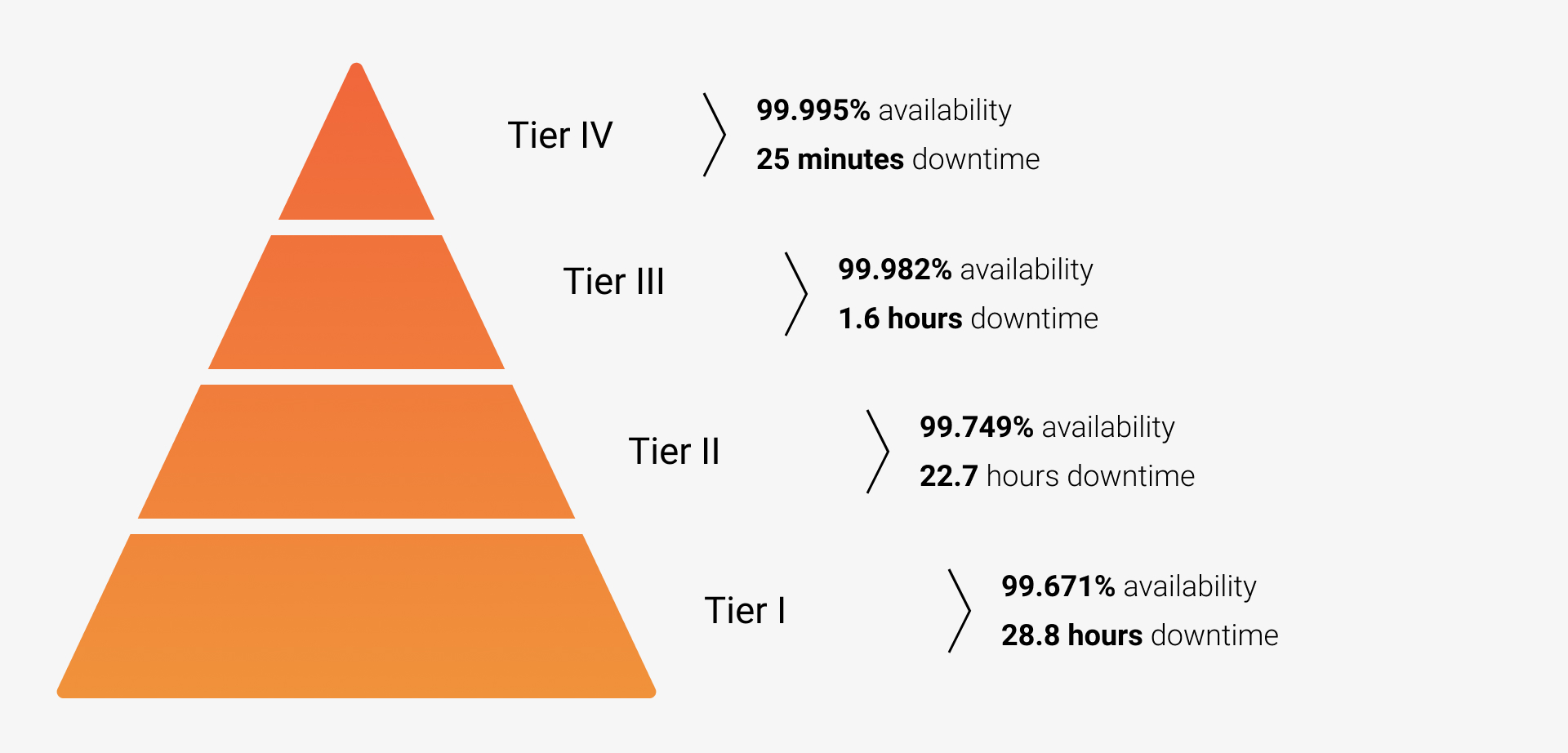
Tier 3 facilities typically guarantee 99.99% uptime, which translates to roughly 52 minutes of potential downtime per year. Most mid-sized businesses find this level of reliability more than adequate for their operations. Tier 3 data centers require multiple independent power distribution paths and cooling systems, meaning you’ve got backup systems for your backup systems. They also mandate regular maintenance windows, but here’s the key: you can schedule maintenance during these windows without affecting your services because of that concurrent maintainability feature.
Exploring Data Center Tier 4 Capabilities
Tier 4 data centers are the gold standard of the industry. These are “fault-tolerant” facilities designed to handle almost anything you throw at them. While Tier 3 offers concurrent maintainability, Tier 4 goes further by providing fault tolerance, meaning the facility can withstand the failure of any single component without causing any downtime whatsoever.
The uptime guarantee for Tier 4 infrastructure reaches 99.995%, which translates to only about 26 minutes of potential downtime annually. For comparison, that’s half the downtime of a Tier 3 facility. Tier 4 data centers feature fully redundant systems for power, cooling, and networking. They include automatic failover capabilities and require zero scheduled maintenance windows that impact availability. Every component is built with redundancy, from power generators and UPS systems to cooling units and network connectivity.
Key Differences in Uptime Guarantee Infrastructure Certification
The difference between Tier 3 and Tier 4 certification hinges on how they handle failures and maintenance. Tier 3 requires you to have maintenance windows, even if they’re rare. Tier 4 eliminates this requirement entirely. This distinction matters tremendously for mission-critical applications like financial systems, healthcare platforms, or e-commerce sites where every second of downtime costs money.
When evaluating uptime guarantee infrastructure certification, you should look for official Uptime Institute certifications. These certifications are independently verified and audited, meaning you’re not just taking the data center’s word for their capabilities. The certification process is rigorous and involves extensive documentation, testing, and ongoing compliance monitoring. It’s not a quick checkbox—it’s a thorough evaluation of the facility’s design, operations, and redundancy measures.
Demystifying Concurrent Maintainability in Data Centers
Concurrent maintainability is one of those technical terms that sounds complicated but actually makes intuitive sense once you understand it. What is concurrent maintainability in a data center? It’s the ability to perform maintenance on any component of the facility simultaneously while maintaining full service availability to customers.
Imagine your data center loses a power distribution unit. In a less robust facility, this might knock out services. In a Tier 3 facility with concurrent maintainability, that failed unit can be repaired or replaced while backup systems automatically handle the load. Your applications keep running, your users notice nothing, and your business doesn’t skip a beat. This is why concurrent maintainability is such a valuable feature—it makes infrastructure invisible to your operations.
Server Hosting Facility Reliability: What Matters Most?
When choosing a server hosting facility, reliability should be your top consideration. But how do you actually assess reliability beyond just the tier rating? Look at several factors: power redundancy (does the facility have multiple utility feeds and backup generators?), cooling redundancy (can the facility maintain temperatures if a cooling unit fails?), and network redundancy (are there multiple internet service providers serving the facility?)
Also consider the facility’s track record. A Tier 4 certification is impressive on paper, but you want to know about actual uptime performance. Ask potential hosting providers for references and speak with their current customers about real-world experiences. Additionally, examine their staffing levels and expertise—modern data centers need skilled technicians on-site 24/7 to manage complex infrastructure.
Making the Tier 3 vs Tier 4 Decision
So should your business go with Tier 3 or Tier 4? The answer depends on your specific needs and budget. Tier 3 facilities are typically 30-40% less expensive than Tier 4 and provide excellent reliability for most applications. If you can tolerate brief maintenance windows annually and your business won’t suffer catastrophic losses from rare downtime incidents, Tier 3 is a smart choice.
Tier 4 makes sense for critical infrastructure where downtime equals significant financial loss or impacts public safety. Financial institutions, healthcare providers, and major e-commerce platforms typically gravitate toward Tier 4 facilities because the cost of downtime far exceeds the premium they pay for better infrastructure.
Conclusion: Understanding Your Infrastructure Needs
Data center tier standards exist to give you clarity and confidence in your hosting decisions. Whether you choose Tier 3 with its concurrent maintainability or Tier 4 with its fault tolerance, you’re making an informed decision based on industry-recognized standards. Take time to understand what uptime guarantee infrastructure certification means for your specific situation, evaluate multiple hosting providers, and don’t hesitate to ask detailed questions about their facilities and redundancy measures. Your infrastructure is too important to leave to chance.
Choosing the right server infrastructure format is crucial as your digital ecosystem expands. If you want to learn more about setting up your own servers versus using full-scale setups, check out our guide on finding the perfect balance for your business growth.
Internal Link: https://congresodewebmasters.com/self-hosting-vs-managed-cloud-hosting/
External Link: https://congresodewebmasters.com/data-center-tier-3-vs-tier-4-standards/
Leave a Reply