

How Your Hosting Infrastructure Directly Impacts Loading Speed and Google Rankings
Understanding the Connection Between Hosting and SEO Performance
Your website’s hosting infrastructure is far more than just a storage solution for your files. It represents a critical foundation that directly influences how quickly your pages load, how well they rank in Google’s search results, and ultimately, how users perceive your brand. The relationship between how hosting affects SEO cannot be overstated, as search engines now prioritize website performance as a core ranking factor.
When you choose a hosting provider, you’re making a decision that ripples through every aspect of your website’s digital presence. Poor hosting choices can result in slow loading times, increased bounce rates, lower conversion rates, and diminished search engine rankings. Conversely, robust hosting infrastructure ensures your website performs optimally, delighting both users and search engine algorithms.
Website Loading Speed and Hosting: The Direct Impact
Website loading speed and hosting are inextricably linked. The quality of your hosting environment determines how quickly your server can process requests, retrieve data, and deliver content to visitors. When your hosting infrastructure fails to deliver speed, your website suffers across multiple fronts.
Google officially confirmed that page speed is a ranking factor in both desktop and mobile search results. This means that two websites with identical content but different hosting infrastructures will likely rank differently based purely on loading speed performance. A website hosted on premium infrastructure with optimized servers will consistently outrank a competitor using budget hosting with overcrowded servers.
The relationship between hosting quality and loading speed extends beyond mere technical specifications. Premium hosting providers invest in modern hardware, content delivery networks, and server optimization techniques that faster hosting enables. These investments directly translate to measurable improvements in how quickly your web pages load for users across the globe.
Server Response Time Optimization: The TTFB Factor
Server response time, commonly measured as Time To First Byte (TTFB), represents the time elapsed from when a user’s browser requests a webpage until the server begins sending data back. This metric is crucial for understanding how hosting affects SEO performance and user experience.
TTFB improvement tips begin with selecting hosting infrastructure capable of handling your traffic volume efficiently. When a server is overloaded with too many websites or insufficient processing power, response times spike dramatically. This creates a bottleneck that impacts every single visitor, regardless of their connection speed or device performance.
A healthy TTFB typically falls below 600 milliseconds, though Google recommends aiming for under 200 milliseconds for optimal performance. Hosting providers who invest in fast processors, sufficient RAM, and efficient database optimization can consistently achieve these targets. Budget hosting providers often struggle to meet these benchmarks due to server overcrowding and outdated hardware.
TTFB Improvement Tips for Better Performance
Implementing TTFB improvement tips requires a multi-layered approach. First, assess your current server response time using tools like Google PageSpeed Insights or GTmetrix. These tools provide baseline measurements that help you understand your hosting infrastructure’s actual performance.
Choose a hosting provider that offers SSD storage rather than traditional HDD storage. SSD drives dramatically reduce data retrieval times, directly improving server response times. Additionally, ensure your hosting plan provides adequate RAM and processor cores for your website’s needs. Shared hosting with thousands of websites competing for resources creates unnecessary delays.
Content Delivery Network (CDN) integration represents another powerful TTFB improvement strategy. CDNs cache your content across geographically distributed servers, ensuring users download from the closest server location. This reduces network latency and dramatically improves loading speeds regardless of your primary server’s location.
Database optimization cannot be overlooked. Implement proper indexing, remove unnecessary database queries, and consider database caching solutions. Your hosting provider should offer tools and support for monitoring and optimizing database performance, as bloated databases significantly impact server response times.
Premium Hosting Infrastructure and Search Engine Rankings
The correlation between premium hosting infrastructure and improved search rankings stems from multiple factors. First, faster websites provide better user experience, which correlates with lower bounce rates and higher engagement metrics that search engines monitor.
Second, how hosting affects SEO includes factors like server uptime and reliability. Search engine crawlers consistently fail to index websites experiencing frequent downtime. Premium hosting providers guarantee 99.9% uptime through redundant systems, ensuring Google’s bots can always access and index your content.
Third, website loading speed and hosting quality influence crawl budget efficiency. Google allocates a specific crawl budget to each website. Faster servers enable Google’s crawlers to index more pages in the same timeframe, particularly beneficial for large websites with hundreds or thousands of pages.
Choosing Hosting That Supports Your SEO Goals
When evaluating hosting providers, prioritize those offering measurable performance guarantees. Request current TTFB benchmarks and average server response times rather than relying on marketing claims alone. Most reputable providers freely share performance metrics through their websites or upon request.
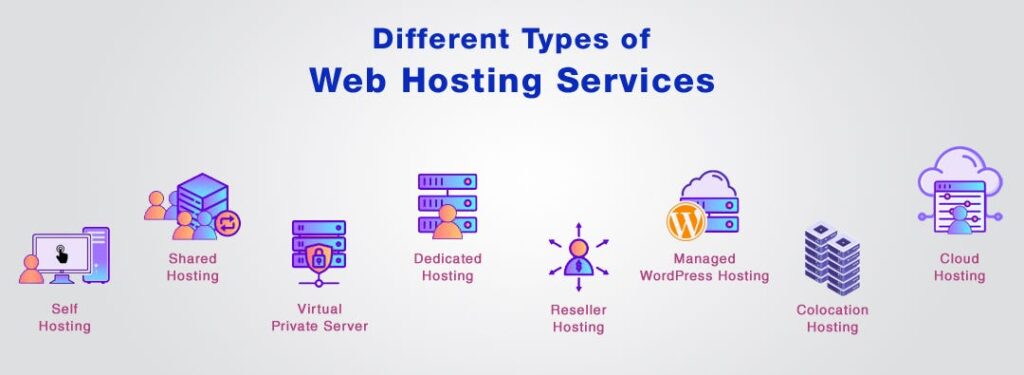
Consider managed WordPress hosting, managed Drupal hosting, or specialized platforms designed for your specific CMS. These solutions optimize server configurations specifically for your platform’s requirements, naturally improving performance compared to generic shared hosting.
Server location matters significantly for TTFB improvement. If your primary audience exists in specific geographic regions, ensure your hosting provider maintains servers in nearby locations. Alternatively, confirm they offer comprehensive CDN integration that compensates for geographic distance.
Conclusion: Invest in Hosting for SEO Success
Understanding how hosting affects SEO reveals a fundamental truth: your hosting infrastructure represents one of your most important SEO investments. Website loading speed and hosting quality directly determine your search rankings, user experience, and ultimately, your online business success. By implementing TTFB improvement tips and selecting premium hosting infrastructure, you create a competitive advantage that translates into better rankings, more traffic, and increased conversions. Don’t underestimate the power of quality hosting in your SEO strategy.
To learn how to select the right platform architecture for your project, read our detailed guide on the Ultimate Guide to Web Hosting Types: How to Choose the Best Infrastructure
. For more technical details on measuring and audit core metrics, check out the official guidelines on Google PageSpeed Insights.
Leave a Reply