
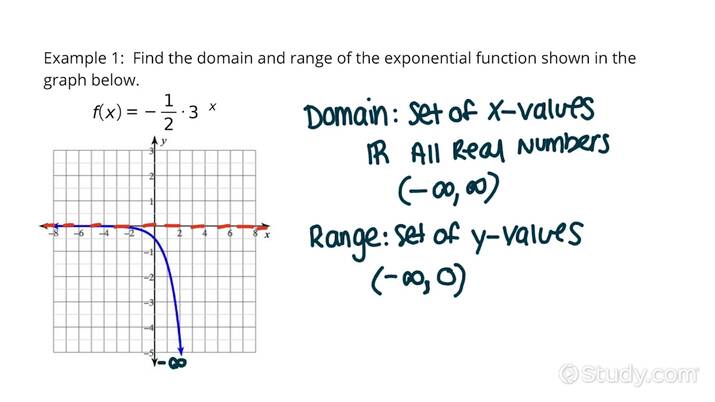
When you’re working with data visualization, analytics dashboards, or building web applications, understanding how to find the domain of a graph is crucial for accurate data representation. Whether you’re a webmaster optimizing site analytics or a developer creating interactive charts, mastering this fundamental concept will enhance your technical SEO knowledge and web development skills.
The domain of a graph represents the set of all possible input values (x-values) for which the function is defined. It’s a cornerstone concept in mathematics that directly impacts how you interpret data, create meaningful visualizations, and communicate insights to your audience. Let’s explore this concept thoroughly and understand why it matters for modern web professionals.
Understanding the Domain of a Graph
The domain of a graph is essentially the “horizontal reach” of your function—every x-value that produces a valid output. Think of it like your website’s indexed pages; just as Google crawls and indexes specific pages (domain coverage), a mathematical function only works with specific input values (the domain).
For SEO professionals and webmasters, this translates to understanding data boundaries. When you’re analyzing traffic patterns, conversion funnels, or user behavior metrics, the domain represents the time period, user segment, or parameter range you’re examining.
Common ways to express domain include: – Interval notation: (0, 5) or [2, 8] – Set-builder notation: {x | x ≠ 0} – Inequality notation: x > -3 – All real numbers: ℝ
How to Find the Domain of a Graph: Step-by-Step Process
Step 1: Look for Restricted Values
The first step in determining the domain of a graph is identifying values that cannot be used. Common restrictions include:
Division by zero: If your function has a denominator, it cannot equal zero. For f(x) = 1/(x-2), the domain excludes x = 2 because this creates undefined behavior—similar to how a broken link breaks your site’s crawlability.
Square roots of negative numbers: In real number systems, you cannot take the square root of negative values. For f(x) = √(x-5), x must be ≥ 5.
Logarithms of non-positive numbers: Logarithmic functions only work with positive inputs. For f(x) = log(x), the domain is x > 0.
Step 2: Examine the Graph Visually
When you’re looking at an actual graph, trace along the x-axis and identify where the function exists. Does it start at a specific point? Does it have gaps? The domain of a graph is where you see the function drawn.
For web professionals, this is like analyzing your domain investing strategy—you need to see where your assets actually exist and perform.
Step 3: Check for Asymptotes and Discontinuities
Vertical asymptotes (where the function approaches infinity) indicate domain restrictions. Holes or jumps in the graph signal excluded values. These interruptions define your function’s boundaries.
Step 4: Consider Practical Constraints
Beyond mathematical restrictions, consider real-world limitations. If you’re graphing website traffic over time, your domain might be limited to operating hours or launch dates. For temperature data, you might only have readings within certain seasons.
Practical Applications for Web Professionals
SEO Analytics and Reporting
When you pull domain metrics from your SEO tools, you’re already working with domain concepts. Your search visibility graph shows performance across a domain of keywords—perhaps the top 100, or keywords with monthly search volume above 100. Understanding these boundaries helps you communicate data limitations to clients accurately.
Interactive Dashboard Development
Building analytics dashboards requires precision about data ranges. If you’re creating a graph showing user engagement over the last 90 days, your domain is [Day 1, Day 90]. Excluding data outside this range ensures clean, accurate visualizations that stakeholders can trust.
Technical SEO Monitoring
When monitoring crawl efficiency, your domain represents the URL space your crawler can access. Setting proper boundaries—excluding admin pages, avoiding infinite parameter combinations—ensures you’re analyzing meaningful data about your site’s actual domain.
Common Domain of a Graph Examples
Linear functions: f(x) = 2x + 3 – Domain: All real numbers (ℝ) – The line extends infinitely in both directions
Quadratic functions: f(x) = x² – Domain: All real numbers (ℝ) – Despite a minimum point, all x-values produce valid outputs
Rational functions: f(x) = 1/x – Domain: All real numbers except 0 – Written as: (-∞, 0) ∪ (0, ∞)
Square root functions: f(x) = √x – Domain: x ≥ 0 or [0, ∞) – Cannot input negative values in real number systems
Domain vs. Range: Understanding the Difference
The domain of a graph is the input (x-values), while the range is the output (y-values). This distinction matters for web professionals:
– Domain = what you can feed into your function – Range = what your function spits out
In SEO terms, if you’re analyzing keyword rankings: – Domain = your target keyword list – Range = possible ranking positions (1-100+)
Tips for Finding Domain of a Graph Accurately
1. Always look for division first: Any denominator in your function is your first place to check for restrictions.
2. Test boundary points: If you’re uncertain, plug in values near suspected restrictions to verify the function’s behavior.
3. Use graphing software: Tools like Desmos or GeoGebra visually show domain gaps and discontinuities, making analysis easier.
4. Consider the context: In real-world applications, domain often has practical limits beyond mathematical ones.
5. Document assumptions: When presenting data to stakeholders, clearly state your domain boundaries to prevent misinterpretation.
For webmasters interested in domain investing opportunities, understanding how digital assets operate within specific parameters—like ATOM premium domains—can reveal untapped potential. Researching atom premium domains for sale helps you identify domain investments that align with specific market domains and audience segments.
Leveraging Domain Knowledge for Technical SEO
Understanding domain boundaries connects directly to technical SEO excellence. When you properly define the domain of your website’s URL structure, you:
– Improve crawl efficiency by clearly defining boundaries – Reduce wasted crawl budget on parameter variations – Create cleaner analytics by understanding data domain limitations – Build better redirects by knowing your domain’s actual scope
Learn more about optimizing your site’s technical foundation by exploring advanced SEO strategies for domain optimization.
Conclusion
Mastering how to find the domain of a graph strengthens your analytical skills as a web professional. Whether you’re interpreting analytics dashboards, building interactive visualizations, or optimizing your website’s technical structure, understanding domain boundaries ensures accuracy and clarity.
The domain of a graph teaches us to respect limitations, define clear parameters, and communicate precisely—principles that elevate every aspect of web mastery. Start applying these concepts to your data analysis workflows today, and watch your insights become sharper and more actionable.
Remember: just as a domain investor must understand their domain’s parameters, every web professional should understand the boundaries of their data, functions, and digital assets.
Leave a Reply