
Understanding RESTful APIs: Architecting Scalable Web Connections
What Is a RESTful API?
A RESTful API, or Representational State Transfer API, is an architectural style for designing networked applications. It leverages HTTP requests to perform CRUD (Create, Read, Update, Delete) operations on resources. RESTful APIs use standard HTTP methods including GET, POST, PUT, PATCH, and DELETE to manipulate data across distributed systems. Understanding what is a restful api is fundamental for modern web development, as these APIs form the backbone of client-server communication in today’s digital landscape.
REST operates on the principle of treating everything as a resource with a unique identifier, typically a URL. Each resource can be accessed, modified, or deleted through standardized endpoints. This simplicity and uniformity make RESTful APIs predictable and easy to understand for developers of all skill levels, contributing to their widespread adoption across industries.
Core Principles of REST Architecture
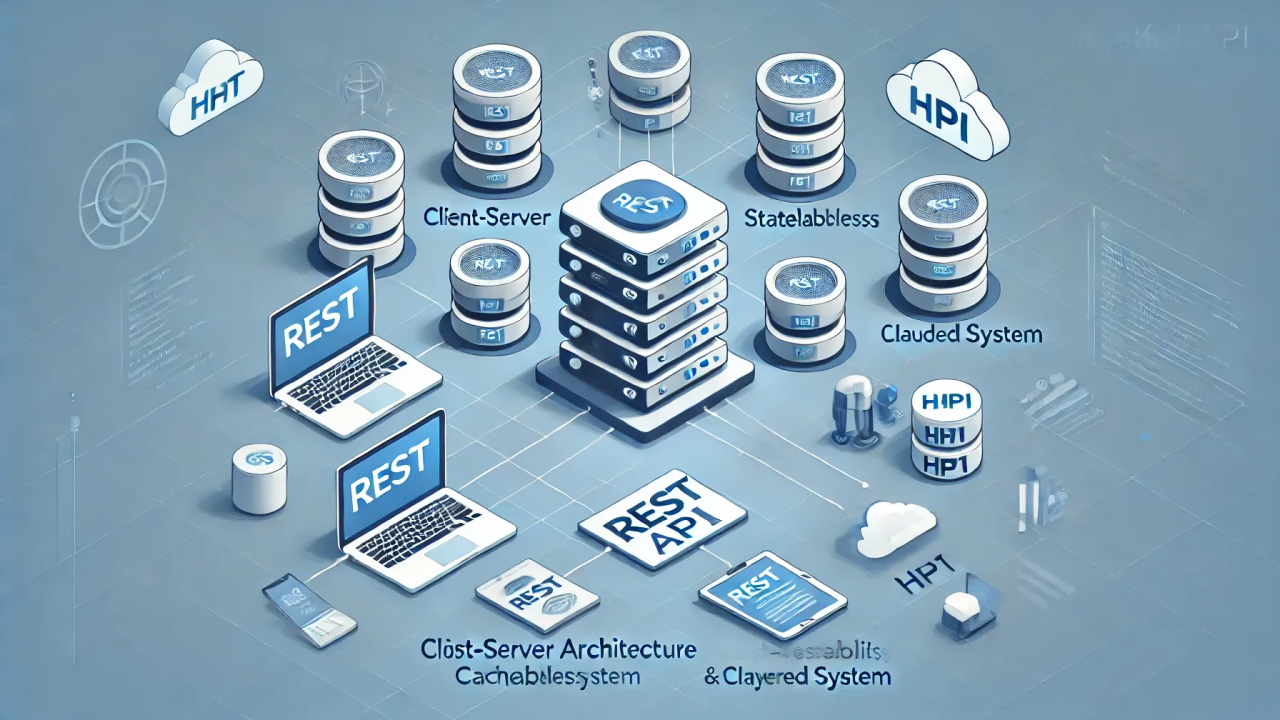
RESTful APIs are built on six core principles that ensure consistency and reliability. The stateless principle means each request contains all necessary information, eliminating server-side session storage. Client-server separation allows independent evolution of client and server components. Cacheability improves performance by enabling responses to be cached when appropriate. Uniform interface standardizes how clients communicate with servers, reducing complexity. Layered architecture permits intermediate servers without affecting communication quality. Finally, code-on-demand optionally allows servers to extend client functionality by transmitting executable code.
These principles work together to create scalable, maintainable systems that can handle growing user bases and complex business requirements without architectural degradation.
How to Build Web APIs Effectively
Building web APIs requires careful planning and adherence to industry best practices. Start by defining clear requirements and identifying the resources your API will expose. Design your endpoint structure thoughtfully, using nouns for resources and HTTP verbs for operations. For example, use GET /users to retrieve all users and POST /users to create a new user.
Implement proper authentication mechanisms, such as OAuth 2.0 or JWT tokens, to secure your API. Version your API from the start to maintain backward compatibility as your system evolves. Use meaningful HTTP status codes to communicate operation results, helping clients understand what happened with their requests. Document your API comprehensively using tools like Swagger or OpenAPI specifications, enabling developers to integrate successfully.
When building web APIs, prioritize performance optimization through pagination, filtering, and field selection. These features reduce payload sizes and improve response times, especially important for mobile applications and resource-constrained environments. Implement rate limiting to prevent abuse and ensure fair resource distribution among users.
API Integration Best Practices
Successful API integration requires a strategic approach beyond basic connectivity. Start with comprehensive API documentation review to understand available endpoints, parameters, and response formats. Implement error handling that gracefully manages various failure scenarios, from network timeouts to server errors. Use descriptive error messages to facilitate debugging and improve user experience.
Security should be paramount in API integration. Never hardcode credentials in your application; instead, use environment variables or secure vaults. Validate all incoming data to prevent injection attacks and other security vulnerabilities. Implement HTTPS exclusively to encrypt data in transit, protecting sensitive information from interception.
Monitor API health continuously using monitoring tools and logging systems. Track response times, error rates, and usage patterns to identify issues before they impact users. Implement circuit breakers to prevent cascading failures when integrated services become unavailable. Test thoroughly with various scenarios, including edge cases and failure modes, to ensure robust integration.
API integration best practices also include maintaining backward compatibility through versioning strategies. Plan for API deprecation carefully, providing adequate notice and migration paths for users. Document integration points clearly and maintain a change log to help other developers understand system evolution.
GraphQL vs REST Development: Key Differences
GraphQL and REST represent different approaches to API design, each with distinct advantages and trade-offs. REST uses fixed data structures defined by server endpoints, while GraphQL allows clients to request exactly the data they need. This flexibility makes GraphQL efficient for complex applications with diverse client requirements.
In REST development, clients often receive over-fetching issues where endpoints return more data than needed. GraphQL eliminates this through precise query specification. However, REST offers simplicity and established patterns that GraphQL requires more sophisticated tooling to replicate.
GraphQL vs REST development presents interesting considerations regarding caching. REST leverages HTTP caching mechanisms naturally, while GraphQL typically uses POST requests, making browser caching more complex. REST is better suited for simple, resource-oriented applications, while GraphQL excels in complex systems requiring flexible data retrieval.
Performance characteristics differ significantly. REST can suffer from the N+1 problem where multiple requests retrieve related data. GraphQL solves this by allowing single queries to fetch entire data graphs. However, complex GraphQL queries can become expensive computationally on the server side.
Building Scalable API Architecture
Scalability should be designed into your API architecture from inception. Implement horizontal scaling by designing stateless services that can run on multiple servers. Use load balancers to distribute traffic efficiently across instances. Database optimization through indexing, query optimization, and connection pooling prevents database bottlenecks.
Consider implementing caching strategies at multiple levels: application-level caching for frequently accessed data, HTTP caching for appropriate responses, and database query caching. Content Delivery Networks (CDNs) distribute static content globally, reducing latency for geographically dispersed users.
Implement asynchronous processing for long-running operations using message queues, preventing request timeouts and improving responsiveness. Monitor system metrics continuously and establish clear scaling policies based on load patterns. Design your API to degrade gracefully when resources become constrained, maintaining service availability even under extreme load.
Conclusion
Understanding RESTful APIs is essential for modern web development. Whether building simple REST services or evaluating GraphQL alternatives, following proven architectural principles ensures your APIs remain maintainable, secure, and scalable. By implementing API integration best practices and designing with scalability in mind, you create robust systems capable of supporting business growth. Invest time in proper planning, documentation, and testing to deliver APIs that developers enjoy using and that reliably serve your applications’ needs for years to come.
To see how these architectural layouts link directly with backend data persistence, read our in-depth analysis on SQL vs NoSQL: Choosing and Optimizing the Right Database
. For a broader lookup on official internet protocols and methods, you can also review the W3C HTTP Architecture Specifications maintained by the World Wide Web Consortium.
Leave a Reply